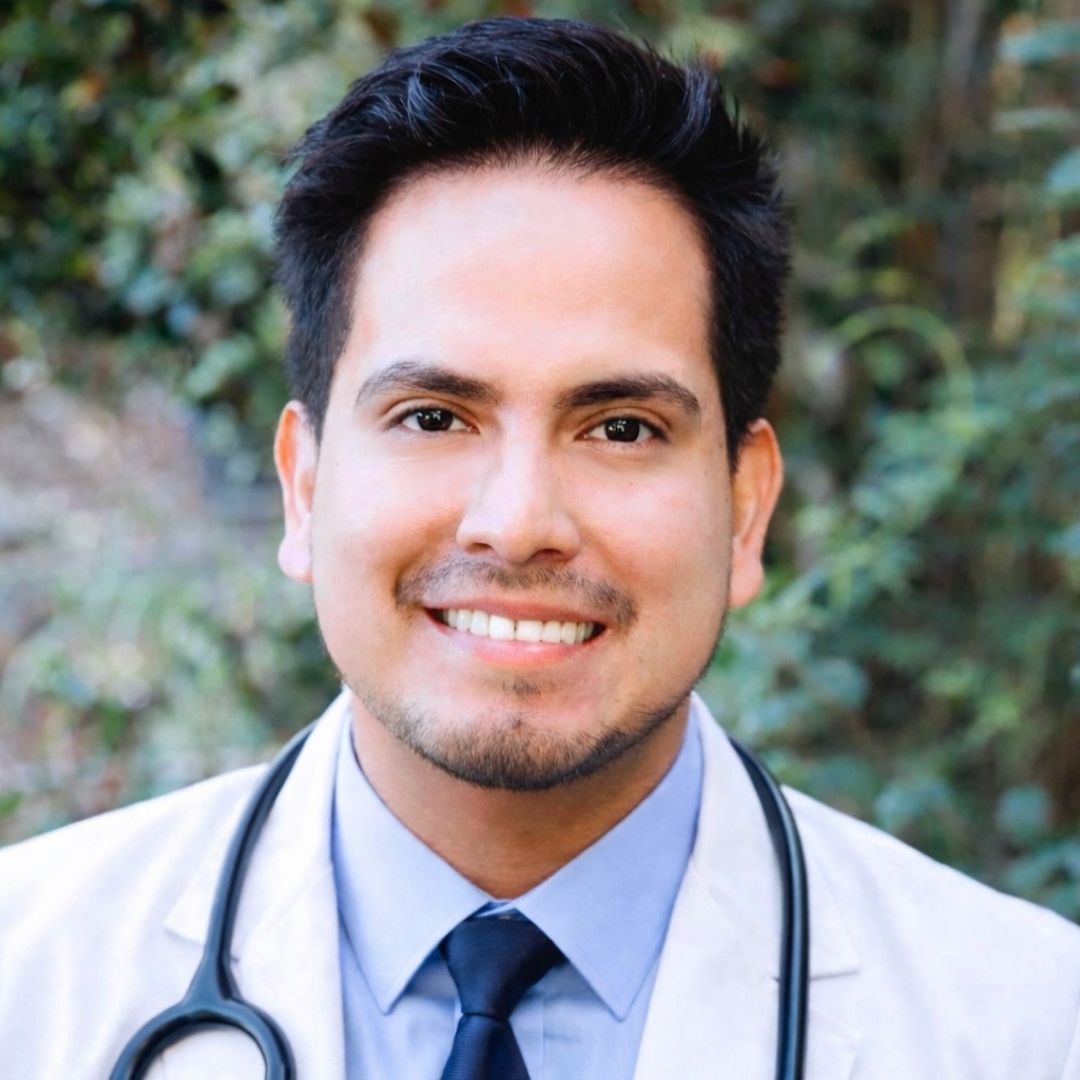
2024 Grad
MD, Universidad Autónoma de Guadalajara School of Medicine
Health Profession Track: Career Changer
Hometown: Escondido, CA
Undergraduate: UC Santa Cruz
Why did you choose to attend the SFSU Post-Bac Program?
I chose to attend the SFSU Pre-Health Post-Baccalaureate Program after several years of working in nonprofit education across California, from Davis and West Sacramento to Los Angeles and San Francisco, where I supported children and families from diverse communities. During the five years following my B.A. from UC Santa Cruz, I witnessed firsthand the gap that often exists between healthcare systems and the students and families I served, which inspired me to pursue medicine so I could one day care for these same communities. The SFSU Post-Bacc provided the structured pathway I needed to transition into medicine, along with professors and mentors who truly understood the challenges of changing careers. Just as important, it offered a tight-knit, supportive learning community that emphasized both academic excellence and personal growth, preparing me through a nontraditional path for the rigor and expectations of medical school.
What is/was your favorite spot on the SFSU campus, and why?
My favorite spot on the SFSU campus was the J. Paul Leonard Library, where I spent countless hours studying and collaborating with my peers during the program. The library’s quiet ambiance, accessible whiteboards, computers and on-site café created a warm learning environment that supported both focused individual study and group work. It became a space where we could come together to review challenging material, teach each other concepts and stay motivated during long days of preparation. More than just a place to study, the library fostered a sense of shared purpose and community that defined my SFSU experience and supported my transition into medical school.
Which SFSU Post-Bac class was your favorite and why?
My favorite SFSU Post-Bac class was General Biology II, which I took as the campus was transitioning out of pandemic closures. While lectures were still online, I chose to attend the lab in person, and only one other student did the same, so for an entire semester it was just the two of us working closely with our professor. At first it felt intense—our sessions were more like detailed conversations, and I often felt under a microscope (excuse the pun). But that experience pushed me to come to every lab fully prepared and engaged. The personalized attention, though challenging at times, ultimately made me a stronger, more accountable student, and I learned an exceptional amount that semester.
What is/was your favorite thing to do in SF?
My favorite thing to do in San Francisco was simply exploring the city with friends and colleagues from the program while being part of such a vibrant and welcoming community. San Francisco will always hold a special place in my heart because, as a gay man, it was incredible to live and learn among a large, open and proud queer community where I felt a strong sense of belonging. During the program, I also worked part-time supporting children with exceptional needs, so my days were often a meaningful blend of studying health sciences and actively supporting the health and development of my clients. Being able to grow academically, professionally and personally in such an inclusive and dynamic city made my time in SF deeply fulfilling.
Tell us something you learned as an SFSU Post-Bac that is important to you.
One of the most important lessons I learned as an SFSU Post-Bac is that it is never too late to change your goals and pursue new dreams. As we get older, major life changes can start to feel impossible, expensive and exhausting, and those fears are very real. However, my experience at SFSU showed me that with a strong, supportive community and mentors who provide guidance and practical tools, even a significant career transition, like becoming a physician, is achievable. That realization reshaped how I see my own potential and the paths available to me. I will carry this lesson with me throughout my medical journey and into my future career, especially when encouraging patients and communities to believe that meaningful change is possible at any stage of life.
What advice would you give to incoming post-bac students?
My advice to incoming post-bac students is to stay open to growth, both academically and personally. Whether you are entering as a career changer or an academic enhancer, don’t be afraid to reevaluate and change your study habits. Talk with peers, seek guidance from professors and make use of online resources. Adapting how you learn can only make you a stronger student. At the same time, remember that you are more than just a student. Take time to explore the Bay Area, try new foods and create lasting memories, because these experiences are just as valuable as what you learn in class. To become a well-rounded future healthcare professional, it’s essential to engage with the communities you hope to serve, whether through meaningful volunteer work or simply immersing yourself in the culture around you. Work hard, stay curious, build connections, and don’t forget to enjoy the journey.
What resources have you used while a post-bac to help you reach your goals?
While in the post-bac program, I relied heavily on collaborative studying with my peers, meeting regularly with professors for guidance, and using Anki decks to support memorization of complex material. These resources helped me stay accountable, clarify challenging concepts and retain large volumes of information more effectively. I also learned that there are many study tools available, and success comes from identifying which ones work best for you and adapting them to your unique learning style. Finding and personalizing the right resources was key to helping me reach my academic goals.
Did you make meaningful friendships in the program? If so, tell us about them.
I made some truly meaningful, lifelong friendships during the SFSU Post-Bac program. Even though we’re now at different medical and PA schools, we still find ways to stay connected—whether that’s virtual study sessions or FaceTime calls to catch up and support each other through the ups and downs of training. It feels especially special that I’m even attending medical school with one of my SFSU post-bac friends, which says a lot about how strong those bonds are. These friendships meant so much to me then and still do now, because they remind me that this journey isn’t meant to be done alone. Healthcare is such a team-oriented field, and those early friendships really reflected that spirit of collaboration and mutual support.
If you are currently attending your health professions school, which program are you attending and what is your year in school?
I am currently in my second semester at Universidad Autónoma de Guadalajara School of Medicine, working toward my MD. As a career changer, my journey to medical school has been non-traditional from the start, and that continues in my training now. As an international medical student, I am completing my basic sciences in Guadalajara, Mexico, and will later pursue clinical rotations in Nevada or Illinois. This unique pathway is exposing me to diverse healthcare systems and patient populations, and it is preparing me to care for a wide range of communities. It has been both challenging and deeply rewarding, and I am learning an incredible amount as I move closer to my goal of becoming a physician.